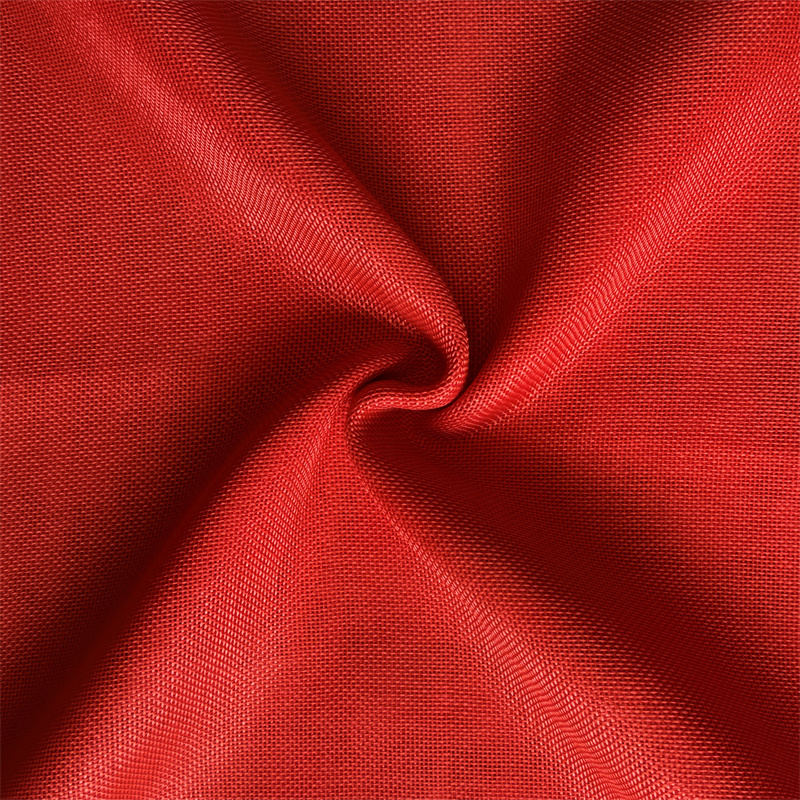
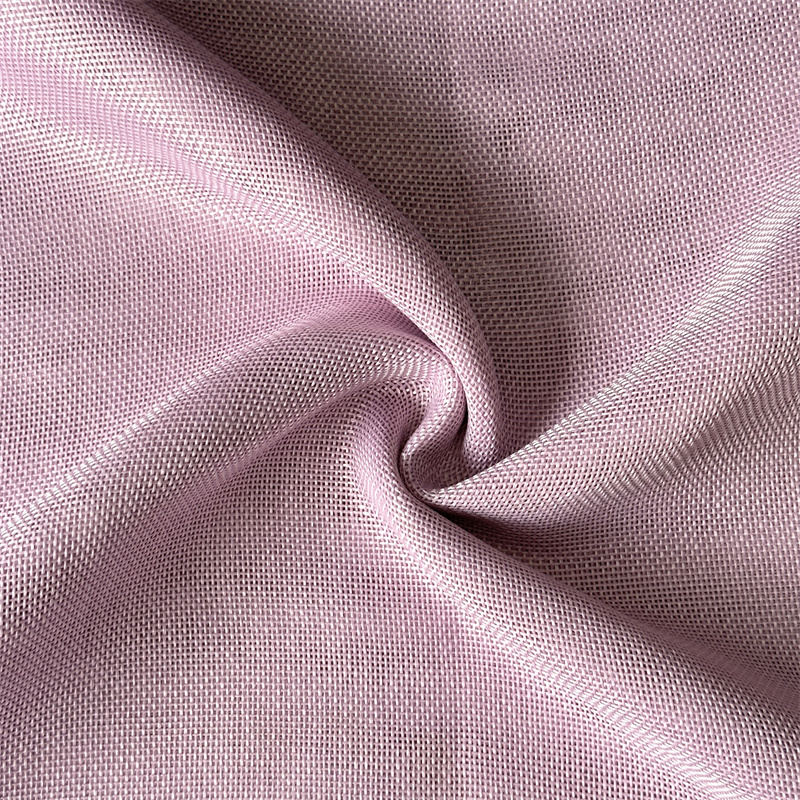
Chenille fabric is a soft, pile-woven textile whose name comes from the French word for caterpillar. It is not a single fiber content: chenille can be made from cotton, polyester, rayon, silk, wool, or a blend. When someone asks for the chenille fabric definition, they are usually holding a sample that feels almost velvety and shows a subtle sheen that changes as the pile is brushed in different directions. The same construction that makes chenille inviting also creates its main trade-offs: softness versus crush resistance, color depth versus cleaning difficulty, and surface texture versus snagging.
Chenille Definition: Yarn First, Fabric Second
Chenille definition begins with the yarn, not the weave. A chenille yarn is made by placing short lengths of fiber between two or more core yarns and twisting the cores together. The short fibers stand out from the core at all angles, forming the soft pile. When that yarn is used as weft in a woven fabric, the result is chenille fabric. If it is knitted, the same yarn produces a softer, more elastic chenille knit.
Because chenille is a yarn construction, fabric sellers should state fiber content separately. A 100-percent cotton chenille behaves differently from a polyester-rayon chenille. Cotton gives breathability and a natural matte tone, while polyester adds strength, colorfastness, and resistance to crushing. Wool chenille is warm and resilient but more expensive. For upholstery, a polyester-cotton blend is a common compromise between hand feel and durability.
How Chenille Yarn Is Made
Chenille has roots in 18th-century France, where silk was used to make a soft, fuzzy trim modeled after a caterpillar. Modern production is faster: a strand of fiber is cut into tiny lengths, laid between two core yarns, and twisted on a chenille machine. The result is a rope of yarn with a bristled surface. The yarn is then wound, dyed, and woven or knitted into fabric.
Quality depends on the twist level. A tight twist holds the pile firmly; a loose twist makes the fabric softer but more likely to shed or shift. If you run a fingernail across the surface and see a bare line, the pile is not well anchored. That test is more reliable than a price tag.
Key Characteristics of Chenille Fabric
Chenille has three defining characteristics: a fuzzy hand, a directional pile, and a soft luster. The pile catches light differently when you brush it up or down, which is why chenille upholstery can look slightly different under a window than under a lamp. This is not a defect; it is part of the fabric's depth.
Chenille also has more body than flat surfaces. A woven chenille upholstery fabric will have noticeable weight and be slightly springy. This helps drape in curtains and gives a comfortable feel on cushions. However, the pile can be flattened by heavy pressure, so a sofa seat that gets constant use may develop a polished look on the cushion.
| Property | Chenille | Velvet | Boucle |
|---|---|---|---|
| Yarn structure | Soft cut pile twisted around core yarns | Dense cut pile woven with short loops sheared after weaving | Curled or looped yarn that creates a nubby surface |
| Surface feel | Fuzzy, plush, directional sheen | Smooth, soft, high luster | Textured, bumpy, less plush |
| Common uses | Throws, cushions, apparel, accent upholstery | Formal apparel, drapery, cushion covers | Jackets, upholstery, blankets |
| Care | Gentle wash or dry clean | Usually dry clean | Spot clean or gentle wash |
| Durability in use | Moderate; can flatten or snag | Can crush; avoid heavy pressure | Generally more durable in bouclé yarns |
Pros and Cons of Chenille Fabric
For buyers, the advantage list tends to be visual and tactile, while the disadvantage list is practical.
The strengths
- Very soft texture against skin and on seating.
- Rich, deep color because the pile absorbs dye from exposed fiber ends.
- Excellent drape in light- to mid-weight constructions.
- Hides wrinkles and small surface irregularities.
- Available in cotton, polyester, rayon, wool, and blends.
The limitations
- Loose-pile chenille can shed, especially in the first weeks of use.
- Pile can snag on jewelry, zippers, and pet claws.
- High-traffic seating may flatten or develop a visible sheen.
- Water-based stains are hard to remove without disturbing the pile.
- Not all chenille fabrics are suitable for heavy upholstery use.
Where Chenille Fabric Works Best
Chenille earns its place where softness matters more than sharp resistance. In home textiles, it is used for throw blankets, decorative cushions, bedspreads, and window panels. In apparel, it appears in sweaters, cardigans, dressing gowns, and children's clothing. In upholstery, an accent chair or headboard is a safer choice than a family couch, unless the chenille has a high abration test result.
- Apparel: sweaters, cardigans, robes, hats, and scarves.
- Home textiles: throws, cushions, bedspreads, and drapery.
- Upholstery: accent chairs, benches, and headboards.
- Decorative uses: chenille patches, letters, rugs, and trims.
How to Care for Chenille Fabric
Because the pile is not a separate layer but the exposed ends of short fibers, care should be aimed at keeping those ends aligned and secure.
- Check the fiber content and care label. Cotton and cotton-polyester chenille can usually be machine washed cold on a gentle cycle; silk or rayon chenille should be dry cleaned.
- Turn the item inside out before washing to reduce friction on the pile.
- Air dry flat. A dryer can shrink the core yarns and change the twist, causing the pile to pull out.
- When stains happen, blot with a clean white cloth and avoid rubbing. Rubbing forces the spill into the pile and flattens it.
- Vacuum chenille upholstery with a soft brush attachment, moving in one direction.
What to Specify When Sourcing Chenille Fabric
If you are buying chenille for production, the definition of chenille alone is not enough. The fabric is defined by the fiber, the yarn twist, and the weave, so those specifications need to be in the purchase contract.
- Fiber content and blend percentage, including any backing yarn.
- Fabric weight in grams per square meter (GSM) and width.
- Yarn type: staple chenille, chenille with a synthetic core, or spun-polyester chenille.
- Wyzenbeek or Martindale abrasion result, especially for upholstery.
- Pilling and snagging test results.
- Colorfastness to light, water, and crocking.
- Care instruction to be printed on the finished product.
In a weaving mill, chenille is usually chosen for a raised, tactile surface. If the design also calls for a pattern, a jacquard loom is a practical way to control where the chenille yarn appears and where a flatter yarn carries the background. That approach limits yarn waste and gives the pile stronger structural support. For development work, our jacquard fabric range is a useful starting point because it includes different base weights and pattern options.
 Jacquard Fabric Manufacturer, Custom Jacquard Fabric Factory Tongxiang Miaoqisi Textile Co., Ltd. is China jacquard fabric manufacturers and jacquard fabric factory, manufacturing of custom jacquard... View Product →
 Chenille fabric definition, in practical terms, means a soft pile yarn that can be woven or knit into textiles with depth, warmth, and a livelier surface than flat cloth. The right chenille for your product depends on fiber choice, twist, weave structure, and the amount of wear it will see. Before ordering, ask for a swatch, perform a fingernail test on the pile, and request test data for snag and abrasion. That is how a fuzzy name becomes a dependable specification.